PROFILE
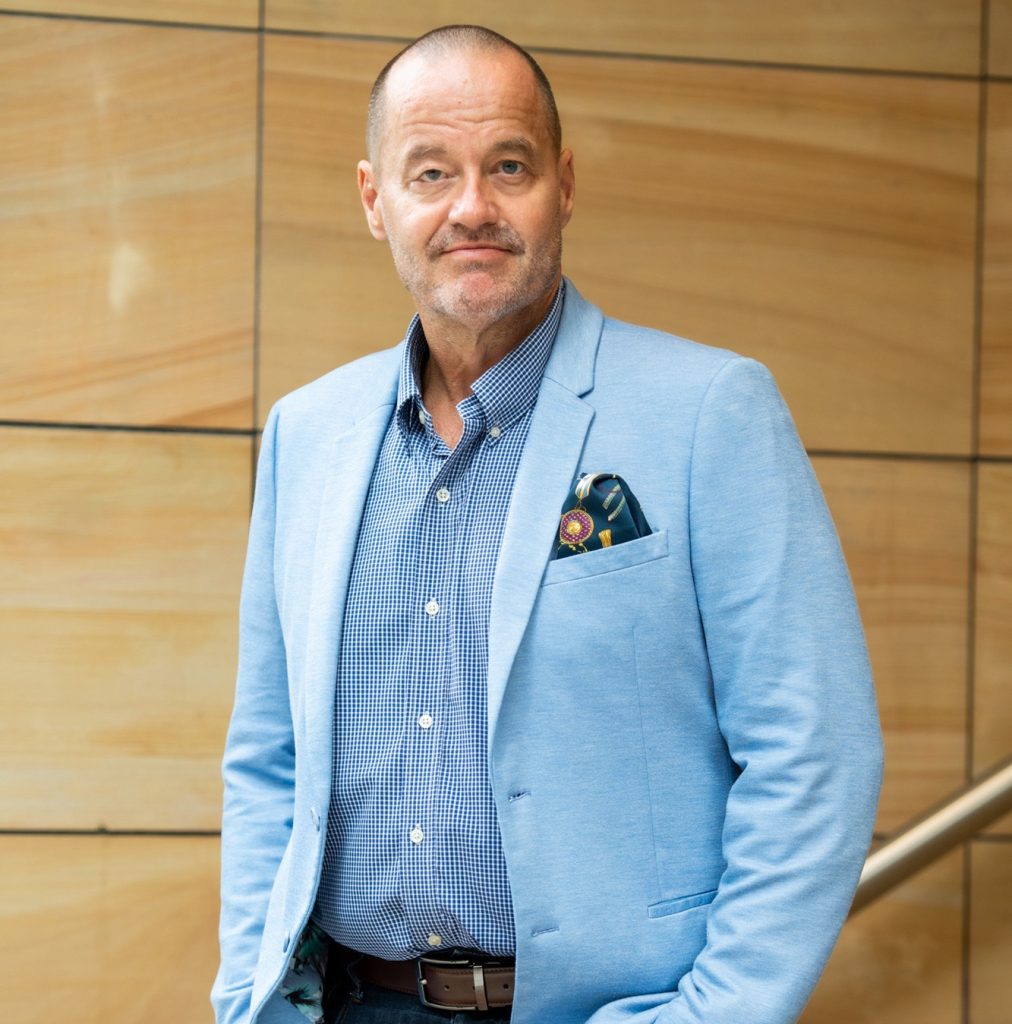
Macquarie University’s Professor Peter Greste is an award-winning broadcast journalist, academic, media freedom activist and author.
Before becoming an academic in 2018, he spent 25 years as a foreign correspondent mostly for the BBC and Al Jazeera. He began his career with the civil war in Yugoslavia and elections in South Africa as a freelance reporter in the early 90’s. In 1995 he joined the BBC as its Afghanistan correspondent and went on to cover Latin America, the Middle East and Africa.
In 2011 he won a Peabody Award for a BBC documentary on Somalia. Later that year, he moved to Al Jazeera as its East Africa correspondent. In December 2013 he was covering Egypt on a short three-week assignment when he was arrested on terrorism charges. After a trial widely dismissed as a sham, he was convicted and sentenced to seven years behind bars.
In prison, he wrote a series of letters defending press freedom. Those letters established the tone of the campaign that ultimately forced the Egyptian government to free him in February the following year after 400 days behind bars. To honour his advocacy, he has won numerous domestic and international awards, including a Walkley for a ‘lifetime contribution to journalism” (Australia’s highest accolade for journalists), the British Royal Television Society’s Judges Award, and Tribeca Disruptive Innovator’s Awards all in 2015.
He has also won the International Association of Press Clubs’ Freedom of Speech Award; the Australian Human Rights Commission Medal, and the Australian Press Council’s 2018 Press Freedom award.
Peter has written about his experiences in The First Casualty, published in 2017 and now in production as a feature film. He remains an avid advocate of media freedom and journalist safety.
SPEAKING TOPICS
Abandon hope: why the “cross-your-fingers” strategy is dangerous
This topic unpacks one of Greste’s most profound lessons of prison – that ‘hope’ encourages us to focus on things beyond our control, and avoids dealing with the most powerful thing we can control – our own minds.
The Grey Zone: How 9/11 created a conflict over ideas that is destroying democracy
This topic explores the zone of tolerance – the space between the blacks-and-whites of polarized extremes essential to democracy, but that appears to be unravelling. The recent US election saw the Grey Zone diminish, along with the rise of far-right parties in Europe.